Blow Molding Mold Development
Professional Design|Precision Manufacturing|Quality Assurance
Manufacture
STEP1
Customer Inquiry & Requirement Confirmation
We identify product usage, material selection, appearance requirements, and evaluate feasibility based on durability, chemical resistance, and dimensional needs.

STEP2
Sample Review & Forming Suggestions
Customers provide reference samples. We explain blow-molding characteristics and evaluate feasibility regarding appearance, draft angles, structure, and mass production.
STEP3
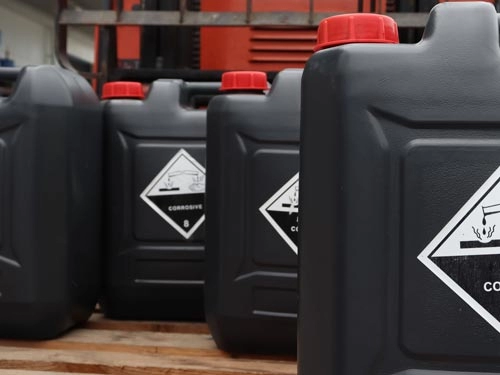
Mold Design & 3D Modeling
A complete 3D mold structure is created, including cooling channels, air needles, and venting systems, ensuring the mold meets production needs.

STEP4
Mold Fabrication & Machining
CNC machining, EDM processing, and mold-base fabrication are performed to ensure dimensional accuracy, cooling efficiency, and surface quality.

STEP5
Trial Molding & Parameter Adjustment
Trial molding is carried out to verify appearance, wall thickness, and dimensional stability. Blow pressure, venting, cooling, and forming conditions are fine-tuned for stable molding.
STEP6
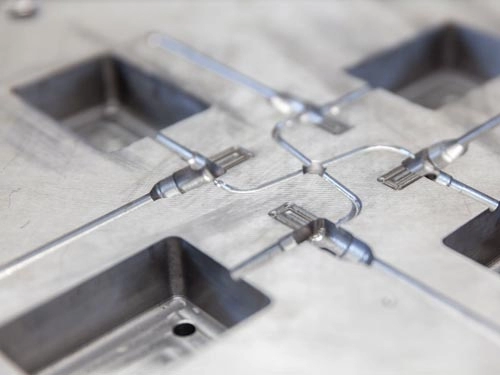
Sample Inspection & Mold Adjustment
Samples undergo checks for appearance, dimensions, sealing, impact strength, and chemical resistance. Mold modifications or parameter adjustments are applied as needed.
STEP7
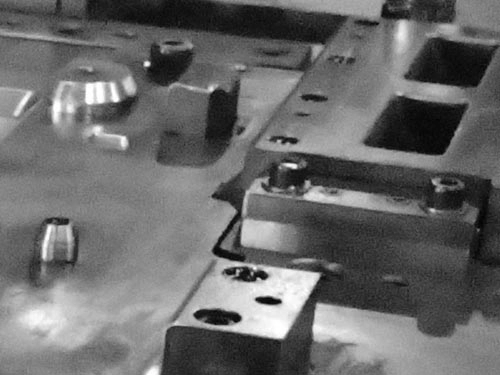
Mass Production & Shipment
Once molding stability is confirmed, mass production begins with strict QC control. Products are packaged and shipped according to customer requirements with ongoing support.
Fin.